produttore professionista, da 2009.
diffondendo il profumo dell'amore in tutto il mondo.


italiano
Categorie
Nuovo blog
Come scegliere il diffusore di fragranze giusto per il tuo spazio commerciale: una guida completa all'acquisto August 27 , 2026
Scegliere un diffusore di aromi professionale non significa semplicemente trovare il modello con la maggiore copertura dichiarata.
La hall di un hotel, una boutique di moda, la reception di un ufficio, una palestra, uno showroom e un centro commerciale possono avere superfici simili, ma altezze dei soffitti, flussi d'aria, orari di apertura, limiti di rumore e norme di installazione completamente diversi.
Il diffusore di profumo giusto deve essere adatto sia all'edificio che alla strategia di profumazione.
Questa guida offre a gestori di hotel, rivenditori, amministratori di proprietà, distributori e team di approvvigionamento un processo pratico per la selezione di un diffusore di fragranze commerciale, evitando di sovradimensionare l'apparecchiatura o di trascurare i costi di esercizio.
Scegli un diffusore di profumo commerciale solo dopo aver verificato sei parametri:
L'area o la zona esatta che deve essere profumata
Il volume cubico di quella zona
Come l'aria entra, si muove e esce dallo spazio
Se l'installazione debba essere autonoma, a parete o collegata all'impianto HVAC
Il programma operativo richiesto, il livello di rumore e il metodo di controllo
Il consumo previsto di olio profumato, il carico di lavoro di manutenzione e il costo totale
La copertura mediatica pubblicata è utile per stilare una lista ristretta di candidati. Non sostituisce un sopralluogo o un incarico in loco.
Iniziate dall'obiettivo del progetto, piuttosto che dalla macchina.
Obiettivi diversi possono richiedere piani di profumazione diversi:
Un hotel potrebbe desiderare un'impressione di benvenuto uniforme nella hall principale.
Un rivenditore potrebbe desiderare un'atmosfera che richiami immediatamente il marchio, in prossimità dell'ingresso e dell'area di vendita.
Un ufficio potrebbe desiderare un'esperienza di reception discreta, senza che ciò influisca sulle singole postazioni di lavoro.
In una sala espositiva immobiliare potrebbe essere necessario diffondere un profumo durante le presentazioni, ma non durante la notte.
Una spa potrebbe necessitare di un funzionamento silenzioso e di un'intensità inferiore in prossimità delle sale per i trattamenti.
Un operatore con più sedi potrebbe dare priorità ad impostazioni standardizzate e procedure semplici per il personale.
Scrivi una frase che definisca il risultato atteso. Ad esempio:
Creare una fragranza delicata e uniforme in tutta l'area di 600 m³ tra reception e sala d'attesa durante l'orario di apertura, evitando che il profumo si diffonda nelle sale riunioni adiacenti.
Questa è una richiesta più utile rispetto a quella di "un potente diffusore di profumi".
La scelta di un diffusore per ambienti commerciali dovrebbe iniziare dal volume della stanza:
Volume dello spazio = lunghezza × larghezza × altezza media del soffitto
Ad esempio, un negozio di 20 metri per 10 metri con un soffitto di 4,5 metri ha un volume aperto approssimativo di:
20 × 10 × 4,5 = 900 m³
Due ambienti con la stessa superficie di 200 m² possono richiedere attrezzature diverse se uno ha un soffitto di 3 metri e l'altro un atrio di 7 metri.
Registra più del numero principale. Includi:
aree aperte e chiuse
Soppalchi e atri
Scale che collegano i diversi piani
Camerini o stanze private
Porte esterne aperte frequentemente
Aree separate da pareti a tutta altezza
Ambienti che devono rimanere inodori
Non sommare automaticamente tutte le stanze in un unico totale. Un ufficio chiuso e una hall aperta potrebbero richiedere una gestione separata, anche se fanno parte della stessa proprietà.
La fragranza si diffonde seguendo il movimento dell'aria. Una planimetria da sola non può mostrare come si propagherà.
Durante il sopralluogo, identificare:
Griglie di mandata e ripresa degli impianti di climatizzazione
Programmi di immissione di aria fresca
Ventilatori di scarico
Porte girevoli, scorrevoli o permanentemente aperte
Scale mobili, atri degli ascensori e vani scale
Ingressi ad alto traffico
Grandi ventilatori o barriere d'aria
Pareti divisorie e scaffalature alte
Confini del servizio di ristorazione o della cucina
Posizioni del personale e posti a sedere per soste prolungate
L'ultimoNorma ANSI/ASHRAE 62.1-2025Il documento tratta di ventilazione, filtrazione, sistemi di controllo, gestione degli edifici e manutenzione per garantire una qualità dell'aria interna accettabile. L'edizione 2025 include requisiti aggiornati per la ventilazione a controllo della domanda, aspetto rilevante poiché il flusso d'aria può variare in base all'occupazione e alla programmazione degli impianti.
Un diffusore di profumo deve funzionare con il flusso d'aria dell'edificio, ma non fornisce aria fresca, non rimuove gli agenti inquinanti né sostituisce la ventilazione.Le attuali linee guida dell'EPA statunitense sulla qualità dell'aria internaidentifica il controllo alla fonte, la ventilazione e la filtrazione o la purificazione dell'aria come strategie fondamentali per la qualità dell'aria interna.
Se un ambiente presenta problemi di fumo, umidità, muffa, drenaggio, residui alimentari o ventilazione, è necessario innanzitutto individuarne la fonte. Le fragranze non devono essere utilizzate per mascherare un problema strutturale irrisolto.
I formati principali sono sistemi autonomi, a parete e collegati agli impianti di climatizzazione.
Le macchine autonome si posizionano sul pavimento, su uno scaffale o su una superficie stabile di un mobile. Sono generalmente il formato più veloce da installare e spostare.
Sono utili quando:
La località necessita di un test pilota
L'accesso al condotto non è disponibile
La zona bersaglio richiede un controllo indipendente
L'inquilino non può modificare l'edificio
La planimetria cambia regolarmente
L'attrezzatura può essere posizionata in modo sicuro
I limiti sono rappresentati dalla visibilità, dal rumore locale, dalla gestione dei cavi elettrici e dalla possibilità che la fragranza si concentri in prossimità dell'unità.
Le apparecchiature a parete possono mantenere liberi banconi e pavimenti. Possono essere adatte a uffici, corridoi, bagni, piccole aree commerciali e zone reception, a condizione che sia disponibile una posizione a parete adeguata e una presa di corrente.
Verificate che il dispositivo non venga ostruito da mobili, tende, merce, porte o code di clienti. Deve inoltre rimanere accessibile per la sostituzione dell'olio e la manutenzione.
An HVAC scent diffuser introduces fragrance into compatible building airflow for broader distribution.
This can suit large permanent spaces when:
The intended area matches a controllable HVAC zone
Equipment should remain outside the customer area
The duct route and injection position are suitable
Facility staff can provide service access
The building owner and engineering team approve the installation
Do not connect tubing to an arbitrary supply or return duct. A qualified building or HVAC professional should review airflow direction, pressure, shared zones, filtration, operating hours, and the risk of fragrance reaching unintended areas.
Coverage should be only one line in the comparison.
Commercial equipment should allow the operator to reduce or increase output through controlled work and pause periods. The available range should be suitable for the smallest intended setting, not only maximum output.
Check whether the machine supports daily time periods, different days of the week, automatic restart, and an easy method for returning to approved settings.
Noise matters in spas, meeting areas, quiet retail environments, VIP lounges, and reception desks. Ask how the published noise figure was measured and assess the sample in the actual placement position.
A larger bottle can reduce refill frequency, but it also increases the amount of oil stored in the device. Select capacity using operating hours, tested consumption, access frequency, and staff responsibility.
Possible options include buttons, touch controls, Bluetooth, Wi-Fi, or an App. More connectivity is useful only if the customer can support account management, permissions, updates, network access, and staff training.
Public-facing equipment may need a lock, hidden controls, secure oil access, or placement outside customer reach.
Confirm how staff reach the oil bottle, atomizer, tubing, seals, filter, and power connection. A concealed installation still needs convenient service access.
The following framework helps narrow the format before comparing individual models.
| Commercial Space | Main Buying Priority | Typical Starting Format |
|---|---|---|
| Large hotel lobby | Broad coverage, quiet operation, premium appearance | Floor-standing or reviewed HVAC solution |
| Fashion or lifestyle retail | Local control, flexible placement, brand presentation | Standalone commercial diffuser |
| Office reception | Subtle output, low noise, simple maintenance | Compact standalone or wall-mounted diffuser |
| Showroom or sales center | Scheduling, visible design, changing occupancy | Floor-standing diffuser |
| Spa or wellness reception | Quiet operation, low minimum output | Compact or wall-mounted diffuser |
| Large multi-zone property | Independent zones and centralized distribution | Multiple standalone units or engineered HVAC plan |
These are starting points, not automatic prescriptions.
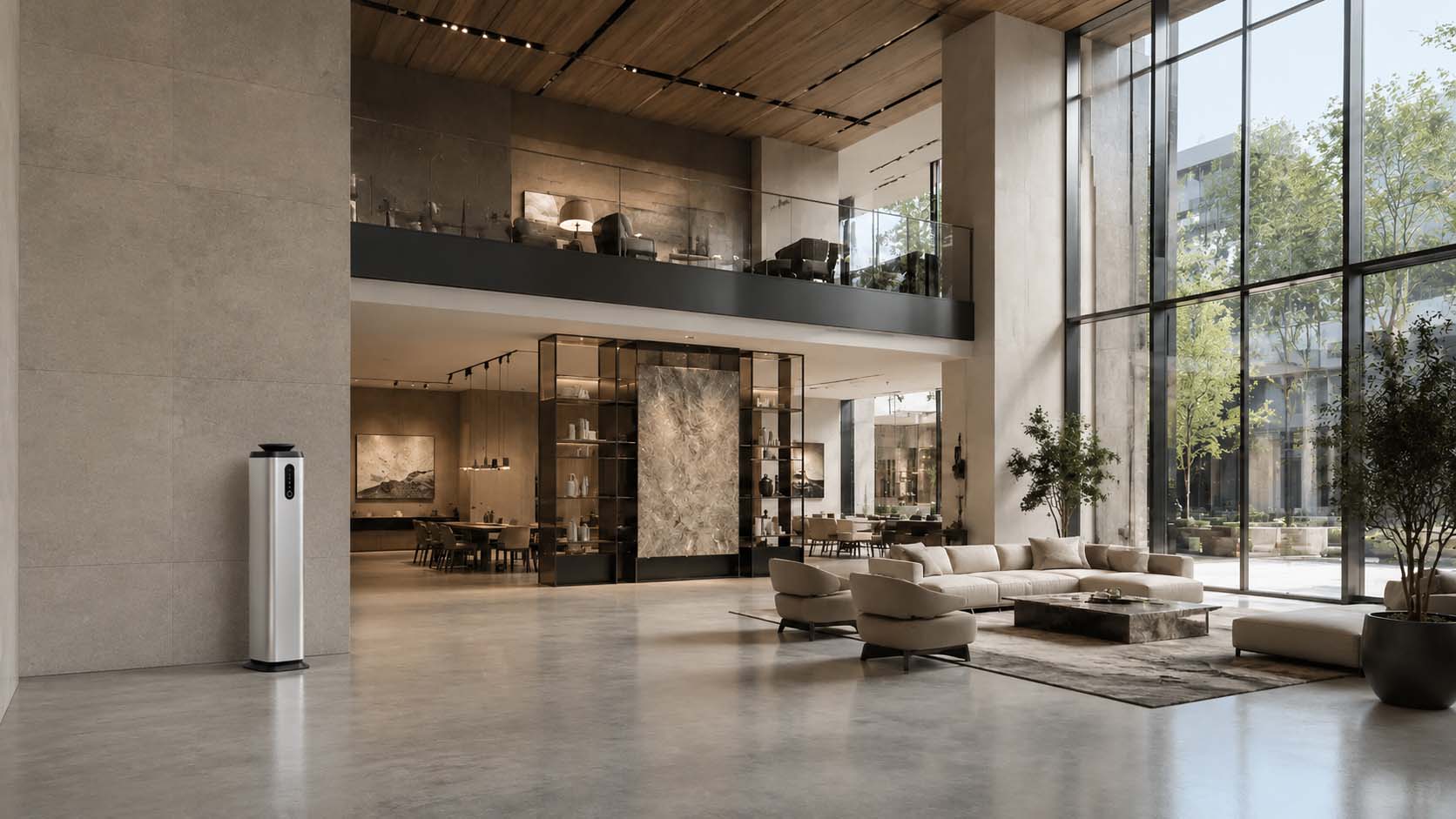
TheDANQ M63 floor-standing scent diffuseris designed for large commercial areas. Current company materials publish a 1,000 ml bottle, standalone installation, low-noise operation, and coverage up to 4,000 m³.
That published figure should be used to shortlist the model, not to guarantee performance in every 4,000 m³ property. A high-ceiling lobby with open doors and strong fresh-air supply may perform differently from an enclosed showroom of the same volume.
The Q1000PRO is part of DANQ’s commercial scent equipment range and can be considered for retail, hospitality, office, and other project environments.
Because final selection depends on the current model configuration, request the latest Q1000PRO specification sheet, installation options, oil capacity, control functions, noise conditions, consumption estimate, and model-specific documents before purchase.
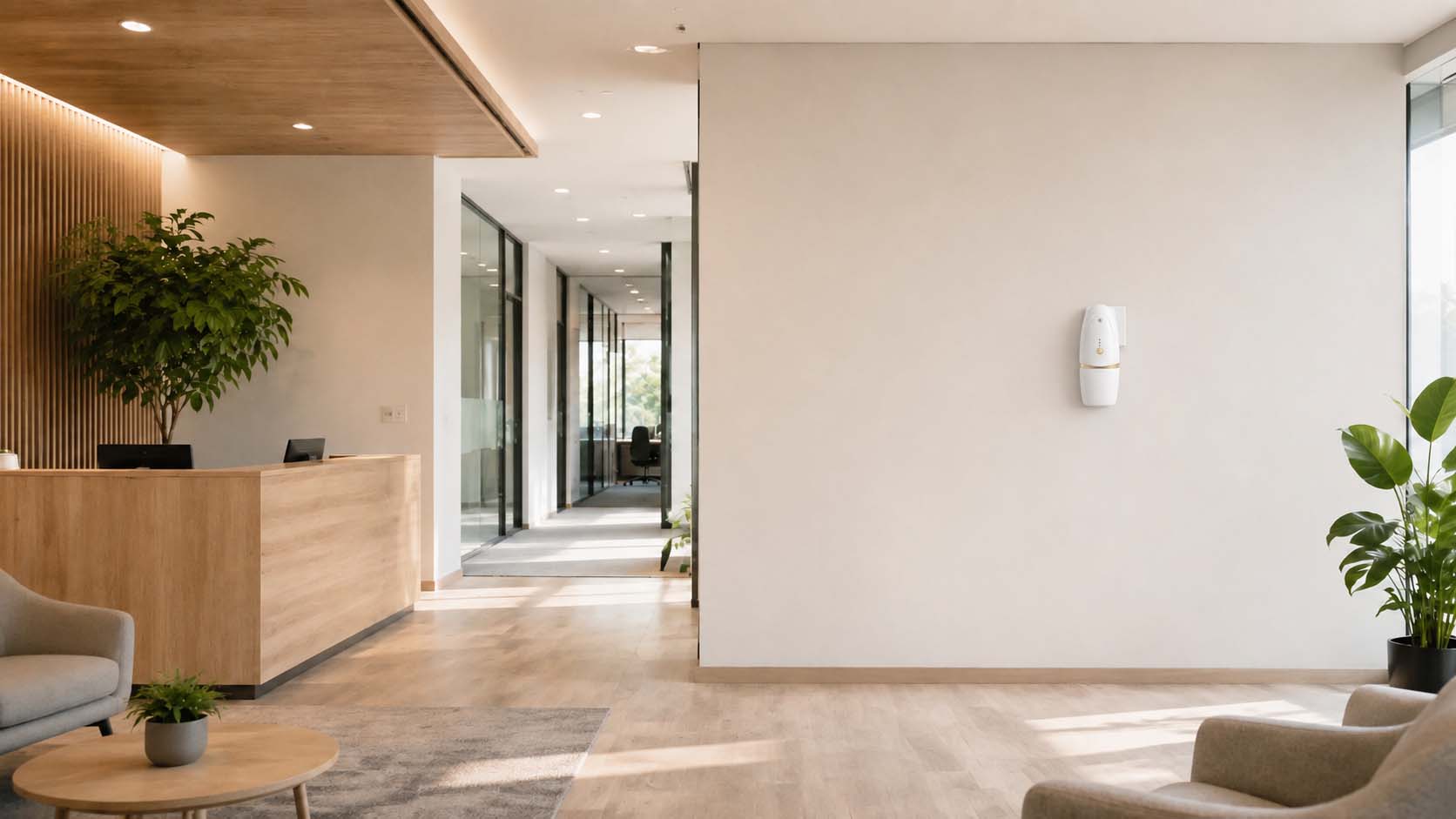
The S915 is a wall-mounted plug-in model designed to keep floor and counter space clear. DANQ product materials describe waterless operation, Bluetooth control, and quiet performance.
Confirm the plug standard, mounting orientation, coverage requirement, lowest output, oil capacity, and service access for the destination market and intended location.
Unit price does not show the full cost of a commercial scent program.
Compare:
Equipment price
Installation or electrical work
Fragrance-oil consumption
Oil price and shipping classification
Refill and cleaning labor
Atomizer cores, seals, tubing, and other wear parts
App or remote-management requirements
Staff training
Replacement equipment or downtime allowance
Freight, duties, and local taxes
A basic operating estimate can use:
Monthly oil cost = tested hourly consumption × daily operating hours × operating days × oil price
Do not use maximum-output consumption if the approved program runs at a much lower duty cycle. Test with the selected fragrance because viscosity and volatility can affect atomization and consumption.
Also compare labor. A lower-priced device that needs frequent local attention may cost more across 30 or 100 locations than equipment with a longer, predictable refill cycle.
The machine, oil, and settings operate as one system.
Before approving bulk oil or equipment, verify:
Atomization stability
Fragrance character after diffusion
Residue around the outlet
Compatibility with tubing, seals, and the atomizer
Consumption under the proposed schedule
Performance after extended operation
Required cleaning interval
A fragrance that smells balanced on a blotter may change after diffusion. Highly volatile notes may dominate first, while heavier materials can affect persistence and maintenance.
Request the current Safety Data Sheet and other documents required for the exact oil, application, and destination market. Do not assume that one fragrance document covers every formula or that every oil is compatible with every diffuser.
Start below the expected final setting and increase gradually.
A useful pilot should include:
Installation during normal building operation
An agreed starting work and pause cycle
Checks at the entrance, center, boundaries, and staff positions
Review during quiet and busy periods
Oil-level and maintenance records
Customer and staff feedback
A documented final setting
Use a simple intensity scale such as:
Absent
Subtle
Noticeable
Strong
Uncomfortable
Ask new arrivals as well as employees. Staff may become less aware of the fragrance after extended exposure.
If the scent reaches restaurants, treatment rooms, neighboring tenants, private offices, or other unintended areas, adjust placement, output, zoning, or operating periods before adding more equipment.
Provide enough information for a project-specific recommendation.
Your RFQ should include:
Country and destination market
Type of commercial property
Floor plan and photographs
Length, width, and ceiling height
Target scenting zones
Areas that must remain unscented
HVAC information and operating schedule
Door and traffic conditions
Required installation format
Daily business hours
Noise expectations
Preferred control method
Fragrance direction
Estimated number of locations
Sample requirements
OEM/ODM requirements
Required model-specific documents
Avoid asking only, “Which machine covers 1,000 square meters?” The supplier needs volume, airflow, zoning, and operating information to make a useful recommendation.
Before approving the purchase order, confirm:
Approved model and hardware revision
Installation method and placement drawing
Voltage, adapter, and plug standard
Oil bottle and atomizer configuration
Fragrance code and approved sample
Initial operating schedule
Cleaning and refill procedure
Spare-parts list
Warranty and after-sales process
Packaging and accessories
Logo, color, or App customization
Current model-specific compliance documents
Pre-shipment inspection criteria
Change-control process
Certification claims should always be verified by exact model and destination. A document for another SKU or an earlier hardware version may not apply to the equipment being ordered.
Calculate the cubic volume using length × width × average ceiling height. Then evaluate airflow, doors, HVAC schedules, zoning, and fragrance intensity before choosing the final model.
No. An oversized machine may create an uncomfortable hot spot, short work cycles, higher cost, or unnecessary noise. The lowest controllable output is important in smaller or quiet spaces.
Choose standalone equipment for flexible placement, pilots, and independent local control. Consider HVAC integration for large permanent zones only after the building system and shared airflow have been reviewed.
A fragrance system is not a substitute for source control, cleaning, ventilation, filtration, moisture correction, or building maintenance. Resolve the source of persistent odors first.
The interval depends on the model, oil, schedule, environment, and operating hours. Follow the model-specific instructions and record refills, cleaning, consumption, and component replacement.
Send the property type, dimensions, ceiling height, HVAC information, doors, business hours, installation restrictions, fragrance direction, destination market, and expected quantity.
The best commercial scent diffuser is not automatically the machine with the highest output. It is the system that delivers controllable fragrance across the intended zone while remaining practical to install, operate, refill, clean, and support.
Measure cubic volume, map airflow, compare installation formats, calculate operating cost, and test the selected machine with the selected fragrance in the real property.
Dal 2009 DANQ produce apparecchiature per la diffusione di fragranze e supporta progetti commerciali, HVAC, domestici, automobilistici, di oli profumati e OEM/ODM. Gli acquirenti possono richiedere consigli sui modelli, cataloghi di prodotti, preventivi, campioni di apparecchiature e campioni di fragranze.
Contatta DANQ Aroma per un consiglio sui diffusori di aromi professionali.

produttore professionista, da 2009.
diffondendo il profumo dell'amore in tutto il mondo.


Guangzhou DANQ Environmental Technology Co.,LTD